
1882 ONWARDS
Sugar and the CSR
What we know
- The Australian Colonial Sugar Refining Company (CSR) began milling in Fiji in 1882 and came to dominate the industry.
- Mills at places such as Nausori, Rarawai (Ba), Lautoka and Labasa were fed by narrow-gauge cane railways.
- CSR left Fiji in 1973 and its mills passed to the Fiji Sugar Corporation.
The story
Sugar became central to Fiji’s colonial economy. The Colonial Sugar Refining Company developed mills and exerted substantial influence over the industry. Cane had to move from fields to processing centres, tying rural labour to wider commercial systems.
Economic growth and workers’ experience were not the same story. Reading them together asks who performed the work, who controlled production and how communities made lives within that unequal arrangement.
Pictures in this chapter
 The Fiji Sugar Corporation Mill, Penang, Rakiraki. (2013)
 Sugar mill, near, Lautoka, Fiji (2013)
 Fiji Sugar Corporation No 21 crossing Nadi Back Road into the cane fields with empty wagons (2008)
 Fiji Sugar Corporation loco no 11 entering Lautoka with a train of c.45 loaded cane wagons (2008)
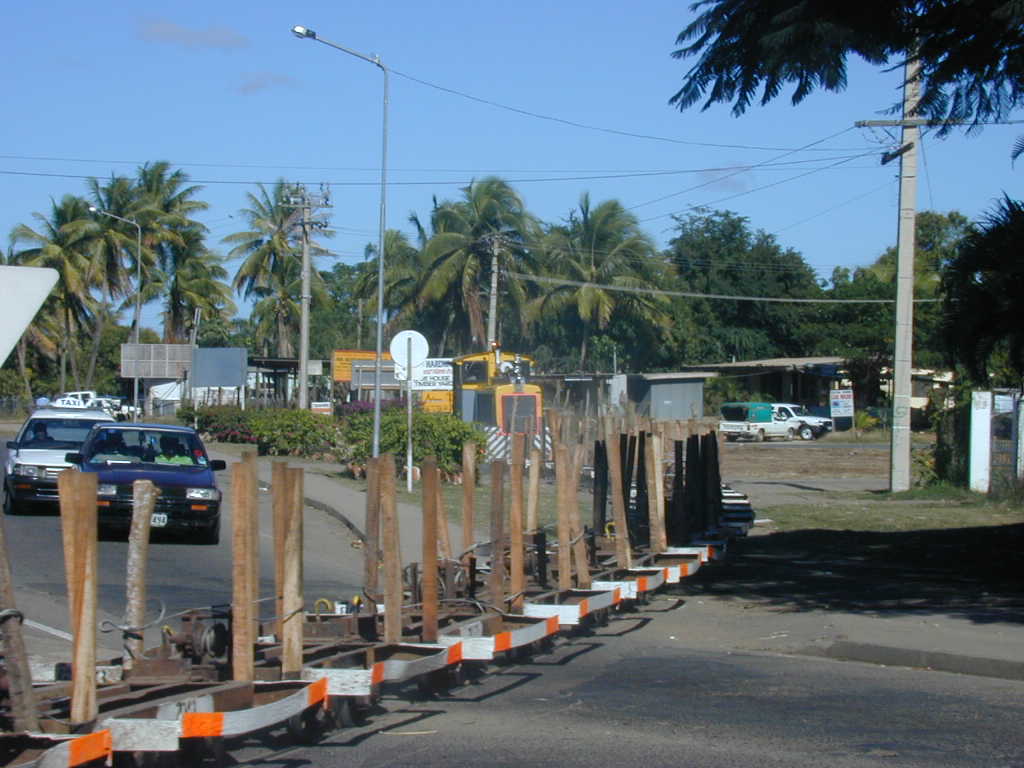 Sugar Cane Train (2003)
 Ba, Fiji, with sugar cane train on railway track on the road, shops, people and vehicles. Ref WA-22181-F. Alexander Turnbull Library, Wellington, New Zealand. Record No 22897014 (1949)
 The Rarawai sugar mill near Ba, Viti Levu (about 1970)
 Fiji Sugar Canes (2008)
 All aboard - This little train in the sugar fields of the Fiji Islands in the world's only free train ride ( Copley News Service , 13 July 1970)
 Sugar cane, Fiji (2013)
Sources
More in Girmit
Tell the museum something
A memory, a correction, or a question. Nothing you send appears on the site. It goes to the museum’s own queue, a person reads it, and they decide. If you teach, know this place, or remember it, your correction is worth more than a compliment.
This chapter’s text is awaiting cultural and historical review. Pictures keep the credit and licence of the collection that holds them.