
ABOUT 1815 TO 1883
Bau and Cakobau
What we know
- Bau, a small island off the east coast of Viti Levu, became one of the most powerful states in Fiji.
- Seru Epenisa Cakobau, Vunivalu of Bau, claimed the title Tui Viti (King of Fiji).
- In 1874 Cakobau and other chiefs ceded Fiji to Britain.
The story
Cakobau held the title Vunivalu of Bau. His rise unfolded amid rivalries with other chiefs, including the long conflict with Rewa. Military strength and allies were both essential.
In 1871 he became the central figure in a new Kingdom of Fiji supported by settlers and some chiefs. Yet many communities did not recognise its authority. That gap between a claim to rule and actual control helps explain the difficulties that preceded cession.
Pictures in this chapter
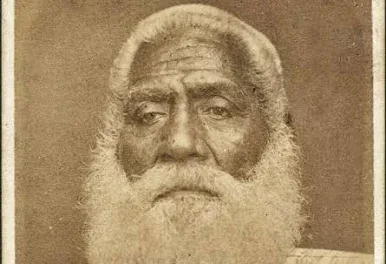 Seru Epenisa Cakobau in old age — historical photograph
 "Thakombau [Cakobau], Vu-ni-valu, King of Mbau [Bau] Fiji. (1858)
 Obelisk in Suva in memory of Cakobau (May 1903)
 Statue to Ratu Epenisa Seru Cakobau Vunivalu and Tui Viti d. (2022)
 Portrait of Seru Epenisa Cakobau, Fiji, ca. 1875, by Francis Herbert Dufty
 Cakobau in western clothing, between 1870 and 1879.
 Native meeting after Thakombau's funeral in Fiji. (1903)
 Edward Gennys Fanshawe, Seru Thakombau (Seru Epenisa Cakobau), 1815 - 83; King of Fiji, 1852-74
 "King Thakombau, 1876, and Autograph" Frontispiece.
 Photograph of Ratu Cakobau (Thakombau). (1869)
 Photograph of Ratu Cakobau (Thakombau). (1869)
 Seated portrait of Thakombau, king of the Fijian group and his son (possibly Ratu Epeli Nailatikau). (1861)
 Sketch of Thakombau (Cakobau), possibly made by one of the author Christian missionary Thomas Williams in the 1850s, published in 1871.
Sources
More in Power and resistance
Tell the museum something
A memory, a correction, or a question. Nothing you send appears on the site. It goes to the museum’s own queue, a person reads it, and they decide. If you teach, know this place, or remember it, your correction is worth more than a compliment.
This chapter’s text is awaiting cultural and historical review. Pictures keep the credit and licence of the collection that holds them.